
Digital PR
Digital PR agency that gets you in the press with real stories
A digital PR agency that earns coverage in the publications your buyers read, with new data and timely expert comment. We never pay for placements.
Content brief
Example- Search
- how much does a new roof cost
- Answer first
- A price range in the first two sentences
- Evidence
- Two cited sources, dated
- Links to
- Roof replacement service page
Coming laterDigital PR as a service from us is coming later. The plans themselves start from $149 a month.
Compare plansRead this first
How digital PR differs from buying links
Lots of link selling looks like PR. Here’s where the line sits; cross it and the risk falls on your website.
What we do
- Pitch only stories we’d be happy to see published with no link at all
- Source, date and show the method for every figure we give a journalist
- Name the experts quoted, and let them approve the wording
- Flag an idea that isn’t newsworthy before it costs anything to make
- Report the coverage we earned, including the pitches that went nowhere
- Keep the data and method available so anyone can check the claim
What we don’t do
- Buy, rent or swap links, or use private blog networks
- Pay for editorial placement and then call it earned coverage
- Publish on sites that exist only to host paid guest posts
- Round, reframe or cherry-pick data to make a headline work
- Promise a number of links, a domain rating increase or a named publication
- Pitch a survey whose method we’d be embarrassed to explain
What journalists look for
What makes a digital PR story newsworthy?
A journalist asks three things. Would my readers want this? Can I back it up? Can I write it today? Almost every failed pitch fails one of those, usually the first.
New is the hardest test. Company news is new to you and old to everyone else, and a statistic stitched together from other reports isn’t new at all. New means information that wasn’t public until you produced it, or an expert view on something happening now.
So the material matters more than the pitching. Good pitching can’t save a weak story, so we put most of the effort into choosing what to make.
Where stories come from
Three places your best stories come from
Almost every campaign worth running uses one of these three, each with different costs, timelines and risks. Most businesses should use more than one.
Original data
Information that wasn’t public until you produced it: your own records, anonymised and analysed, a commissioned survey with a written method, or a public dataset looked at in a new way. Slow to make, but it keeps getting quoted.
Expert comment
Someone in your business with a clear view on something your industry argues about. It works when the expert is qualified and willing to say something specific. Safe comments all sound the same.
Fast comment on breaking news
An informed view on a breaking story, sent within the hour. It earns the most coverage for the least effort, but needs a prepared spokesperson, agreed views and permission to speak without a committee.
The check before we produce
Three things a journalist decides before replying
Fail any one of these and the other two can’t save the pitch. That’s why we test an idea before spending anything on it.
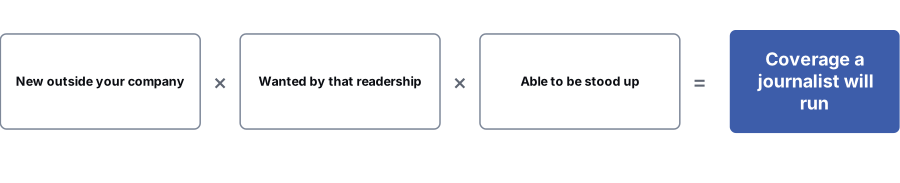
- New outside your company
- Information that wasn’t public until you produced it, or an expert view on something happening now.
- Wanted by those readers
- A story a clear group of readers would want, beyond news that mainly matters inside your business.
- Able to be backed up
- Sourced, dated and shown with its method while the topic is live, so an editor can defend it.
How a campaign runs
How we turn your data into press coverage
Find what you already know
A working session with your operations, sales and support teams to find the information you have and think is ordinary. Most good campaigns start here.
You get: A review of the data and know-how you have
Test the idea
We write the headline first. If it wouldn’t make sense to a reader who’s never heard of you, we drop the idea here, before any budget is spent.
You get: Shortlisted ideas with draft headlines
Produce the evidence properly
We collect or commission the data, analyse it, write down the method and build the page it lives on. If we can’t show our working, it isn’t ready to pitch.
You get: A research piece with its method published
Pitch to journalists who cover your field
We research the journalists who write about your sector and send each one the angle that suits their readers. Mass emails to a bought list get ignored and hurt your next pitch.
You get: Targeted pitching with every response tracked
Keep your spokesperson ready
Coverage brings follow-up questions, and answering fast turns one campaign into a relationship. Meanwhile, fast comment on the news keeps running.
You get: A prepared spokesperson and a fast-comment process
Questions
Common questions about digital PR
Is digital PR just link buying with better manners?
No. Paid links that pass ranking signals break Google’s spam policies. The risk stays with your website, long after the agency that bought them has gone.
Digital PR earns coverage by making something a publication wants to run. It’s slower and brings fewer links, and some campaigns bring none, but nothing was bought in your name.
We are in a boring industry. Will anyone write about us?
Usually yes, and often more easily than a consumer brand, because nobody else has your information. Repair times, failure rates, claim patterns, price changes and seasonal demand are routine to you and new to a reporter.
A story about your company won’t work. A story about your market, told with numbers only you have, will.
How many links will we get?
We won’t give you a number, and be wary of anyone who does. Coverage depends on the news cycle, an editor’s space that week and events nobody controls.
We commit to the work: an agreed number of campaigns, a clear standard for what we pitch and full reports on what landed and what didn’t. Guaranteeing placements would mean buying them.
What makes something newsworthy?
It has to be new, matter to a clear group of readers and come from a credible source. Most pitches fail the first test: the information already exists, or it’s company news that only matters inside the company.
Our filter: could a journalist write a headline from it that makes sense to someone who’s never heard of you? If the headline needs your name to be interesting, it’s marketing.
How long does a campaign take?
A data campaign usually takes several weeks before anything is pitched. We design the question, collect or commission the data, analyse it and build the page it lives on.
Fast comment on breaking news runs on a different clock. Once a spokesperson is ready, a useful comment can go out within an hour of a story breaking, and that speed is most of what makes it work.
Your business already has a story. Let’s find it.
On a short call we look for the information inside your business that nobody outside has, often in a spreadsheet someone thinks is ordinary.
Prefer to talk it over? Book a free call
References
Sources for digital PR agency
The official documents and research this page is based on. Platform rules change, so check the source before you act on a detail.
Related
More on digital PR
- digital PR and link building, comparedWhich of the two you’re buying, and what each costs.
- how we approach linksHow links from press coverage help your rankings.
- planning what to publishCampaign content needs a home on your website.
- our published researchWhat original data looks like when we run it on ourselves.
- our editorial policy
Where digital PR matters most
Problems digital PR can fix
More content & digital PR services
Last updated · Published by Zubair Afzal, responsible editor