
Orthodontics marketing
Orthodontic marketing for two buyers: the parent and the adult
An orthodontic practice sells to a parent worried about a twelve-year-old and to a thirty-four-year-old buying something for themselves. Those are different businesses, and both are now being undercut by aligners posted through a letterbox with no clinician attached.
Prefer to talk it through? Book a strategy call
What usually goes wrong
Where orthodontic marketing tends to fail
An orthodontic practice runs two marketing operations under one roof. One sells to a parent who is anxious about a child teeth and has usually been prompted by a general dentist. The other sells to an adult who has thought about it for a decade and is buying it for themselves.
They share a chair, a clinician and a laboratory. They share almost nothing else: not the search behaviour, not the objection, not the platform, not the finance conversation, and not the person who signs.
- One campaign is trying to reach two entirely different buyers.
- A parent researching adolescent treatment wants to know whether it is necessary, when to start, what it means for school and sport, and whether the family can carry it for two years. An adult wants to know how visible it is at work, how long it takes, whether it can be done without fixed appliances, and what it costs a month. A single landing page addressed to both persuades neither, and the reporting cannot tell you which half is working or which half just collapsed.
- Consultations get booked and a large share never attend.
- The consultation is the conversion event in orthodontics and the most expensive appointment in the diary to waste: clinical time, imaging, and usually a treatment coordinator. Practices that take a small redeemable deposit, book within days rather than weeks, confirm with something explaining what will happen at the appointment, and follow up personally within a day of a missed slot see attendance move further than any change to the advertising would move it.
- Nobody sees a monthly figure until they are in the chair.
- Treatment is paid across eighteen to twenty-four months by most patients, so the number that decides the purchase is a monthly one. Withholding it until the consultation guarantees a room full of people discovering the payment does not fit their budget, and a coordinator spending the week on calls that were never going to convert. A from figure and a representative monthly illustration, with the finance route explained, reduces enquiries and raises starts.
- Aligners posted in a box are taking cases and the practice says nothing about it.
- Direct-to-consumer brands compete on price and convenience for exactly the mild adult cases that are easiest to treat. Attacking them is unattractive and in several markets runs into the advertising rules. What works is explaining what supervised treatment involves: the records and imaging taken first, the conditions that make somebody unsuitable, what gets monitored between appointments, what happens when a tooth does not move as planned, and who is accountable for the result. Practices publishing that convert people who arrived intending to buy a box.
- Referring dentists are assumed rather than managed.
- A large share of adolescent cases arrive because a general dentist suggested it, and most specialist practices cannot say which practices refer, at what rate, or whether the rate is falling. A referring dentist needs simple things: a form that works, quick acknowledgement, a report that comes back, clear criteria for what to refer and when, and confidence that the patient will be returned rather than retained. That is a marketing programme, and it is cheaper than any campaign.
Where the money goes
The orthodontic marketing channels that earn their place
In priority order for this business, not a menu. Anything not on this list is something we would need a specific reason to recommend.
Where the adult half of the practice is decided
Adult orthodontic demand behaves like a visible-outcome purchase, and short video is where it gets created. Treatment explained plainly, what wearing aligners at work is really like, what happens at each stage, and the retention nobody mentions until the end. It is also where testimonial and imagery restrictions bite hardest, so the format and the constraints have to be designed together rather than reconciled after something is posted.
Own the questions asked before a practice is chosen
Cost, duration, whether a child needs treatment at all, aligners against fixed appliances, and what happens if teeth move back are searched heavily and answered thinly. Answering those plainly and in full is the only durable defence against brands with far larger budgets, and it reaches parents in the year before they act rather than in the week they decide.
Demand capture for two audiences, kept apart
Run the adolescent and the adult side as separate campaigns with separate pages, separate creative and separate finance messaging, because blending them destroys the message and the reporting at the same time. Expect health and beauty policy restrictions on most platforms, and build creative to pass review rather than submitting it and appealing afterwards.
A site that prices, explains and books a real date
A from figure and a representative monthly illustration for each treatment type, one page written for parents and a separate one for adults, the treating orthodontist as the subject rather than the building, and consultation booking that takes a deposit and shows a real available date. That combination raises attendance and start rate more than extra traffic would.
Track starts and finance, not enquiries
Consultation attendance, consultation to start conversion by segment, finance uptake and average contract value decide whether this is profitable, and they live in the practice management system rather than in an ad platform. Reconciling the two, and adding a report by referring practice, is usually the most useful thing we do here.
Demand shape
When orthodontic demand arrives, and how
Adolescent demand is seasonal and tied to the school calendar. Enquiries cluster around holidays, because that is when parents can attend appointments and when a child is more willing to start something visible before a new term.
Adult demand has no seasonality worth planning around but is strongly event-triggered: a wedding, a new role, a divorce, a milestone birthday, a photograph somebody disliked. It also tracks pay cycles and bonus periods closely, because it is a monthly payment decision.
The consideration period differs sharply between the two. A parent typically acts within weeks of a dentist raising it. An adult may have been considering it for five or ten years and then decides in the fortnight after something tips it.
Case value is high and volume is low, which makes a handful of extra starts a quarter a material commercial result and makes any judgement based on a single month unreliable.
Retention and relapse create a second demand stream almost nobody markets to: former patients whose teeth have moved, who already trust the practice and cost almost nothing to reach. Most practices lose contact the moment the last appointment finishes.
Two buyers, one practice
A parent acts in weeks. An adult has been thinking for years
These two are researched differently, decided differently and reached differently. A single page written for both usually ends up written for neither.
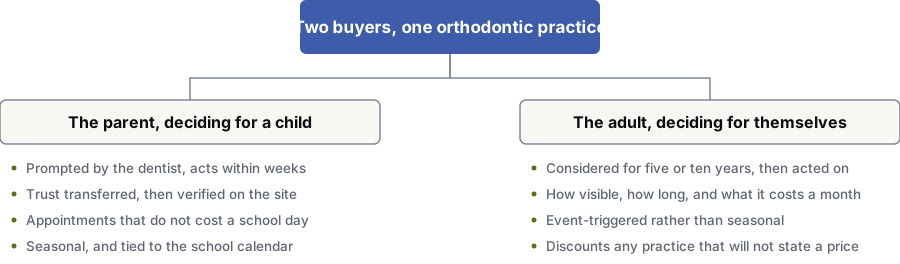
The parent, deciding for a child
- Prompted by the dentist, acts within weeks
- Trust transferred, then verified on the site
- Appointments that do not cost a school day
- Seasonal, and tied to the school calendar
The adult, deciding for themselves
- Considered for five or ten years, then acted on
- How visible, how long, and what it costs a month
- Event-triggered rather than seasonal
- Discounts any practice that will not state a price
Search behaviour
Orthodontic searches, grouped by intent
Parents deciding about a child
Usually prompted by a general dentist, acted on within weeks, researched on a laptop in the evening.
- does my child need braces
- best age for braces
- how much do braces cost for a child
- orthodontist near me for kids
- braces waiting list for children
Adults weighing it up
Long consideration, privately paid, decided on how visible it is and what it costs a month.
- invisible braces for adults
- clear aligners cost per month
- how long do adult braces take
- braces at 40 is it too late
- orthodontist vs dentist for aligners
Supervised care against a box
The category-defining search set, and where a practice either makes its argument or concedes it.
- are mail order aligners safe
- clear aligners with a real orthodontist
- what happens if aligners do not work
- do you need x rays before aligners
- aligners without a dentist visit
Practical and post-treatment
Low volume, high intent, often searched by people already in treatment somewhere else.
- emergency orthodontist broken bracket
- how much are retainers
- teeth moved after braces what now
- how often are orthodontist appointments
- braces payment plan monthly
These are examples of how customers in this market search, drawn from keyword research and public search data. They are illustrative, not a volume claim: we size the demand in your area before recommending anything.
The website
What an orthodontic website has to do
- A from figure and a representative monthly payment for each treatment type
- Separate pages for parents of adolescents and for adult patients
- The treating orthodontist named, with registration and training set out plainly
- A clear account of what supervised treatment includes at every stage
- Honest content on retention, relapse and the long-term commitment to retainers
- Consultation booking that takes a deposit and offers a real available date
- A referring dentist section with criteria, a working form and what happens next
- Treatment duration and appointment frequency stated, because both affect the decision
- Finance terms presented to the standard the credit rules in your market require
Buying behaviour
How orthodontic customers decide
Strategy follows this, not the other way round. Everything on this page is downstream of how the decision gets made.
- Parents choose largely on trust transferred from their general dentist, then verify the practice online. The referral opens the door and the website decides whether they walk through it.
- Adults choose on how visible the appliance is, how long it takes and what it costs a month, roughly in that order, and they discount a practice that will not state any of the three.
- Specialist registration matters enormously to the segment that knows it exists and is invisible to the segment that does not. Explaining plainly what an orthodontist has trained in, without disparaging anyone, reaches both.
- Appointment logistics decide more adolescent cases than anything clinical. Whether appointments can be taken without missing a school day, and how many there will be across two years, is the practical objection a parent is weighing.
- The consultation itself is a selection criterion. Whether options were explained rather than sold, and whether the family left with a written plan and a figure, decides between two practices that both looked good.
- Reviews are read for whether treatment finished on time, whether the fee changed part way through, and how the practice handled a broken appliance at an inconvenient moment.
Constraints
Orthodontic advertising rules: what is allowed, and what is not
The title orthodontist, and describing a practice as specialist, are protected in many markets and permitted only to a clinician on the relevant specialist register. This is the most common advertising breach in the category, and it applies to page titles, advertising copy, directory profiles and anything a third party writes on the practice behalf.
Before-and-after imagery is heavily restricted for registered dental professionals, and a large share of orthodontic cases involve children, which adds a separate consent problem. Parental consent for a photograph of a minor does not automatically extend to advertising use, does not survive into adulthood, and should be documented, time-limited and reconfirmed rather than assumed.
Testimonials and patient endorsements are restricted or prohibited in several jurisdictions, and the restriction commonly reaches comments on content the practice controls, reviews republished on its own site, and content produced by anyone given free or discounted treatment. Replying to a review can itself confirm that somebody is a patient.
Comparative claims about direct-to-consumer aligner brands need care. Stating what supervised treatment involves, what records are taken and what happens if a tooth does not move is factual and defensible. Asserting that an alternative is unsafe, or that an outcome is assured, is neither, and outcome, permanence and pain-free claims are restricted everywhere.
Patient finance is a regulated credit activity in most markets, with disclosure obligations of its own covering how representative figures and interest-free periods must be presented. Getting the dental advertising rules right does not cover it. All of this differs by regulator and by market and is revised periodically. We draft to the constraints we understand apply and flag what needs professional judgement, but the practice must confirm its position with its own regulator. Nothing we produce is legal or clinical advice.
Primary sources
The orthodontic rules above, at source
The rules this page refers to, linked to the regulator or rule-maker that publishes them. Which apply depends on where you operate, and they change, so check the current version.
- Dentists not on a specialist list must not use titles implying specialist status, such as Orthodontist.
GDC advertising
Dentists not on a specialist list must not use titles implying specialist status, such as Orthodontist.
Source: General Dental Council (UK), Guidance on advertising
- Advertising a regulated health service, dentistry included, must not use testimonials or be misleading.
National Law s133
Advertising a regulated health service, dentistry included, must not use testimonials or be misleading.
Source: Ahpra and National Boards (Australia), Guidelines for advertising a regulated health service
- Credit promotions must be clear, fair and not misleading, with a representative example where triggered.
FCA CONC 3
Credit promotions must be clear, fair and not misleading, with a representative example where triggered.
Source: Financial Conduct Authority (UK), Handbook CONC 3: Financial promotions
Questions
Orthodontic marketing questions, answered
Should we market to parents and adults separately?
Yes, and the separation should go further than most practices take it: separate pages, separate campaigns, separate creative and separate reporting.
The two buyers have different objections, different search language, different platforms and different finance conversations. Blending them produces copy that speaks to nobody, and it makes results unreadable, because a strong month for adult aligners can hide a collapse in adolescent referrals.
How do we compete with aligner brands selling direct to the public?
By explaining what supervised treatment involves rather than by attacking the alternative. Criticising a competitor reads as defensive and in several markets runs straight into the advertising rules.
People are already searching whether mail-order aligners are safe, what happens when a tooth does not move, and whether imaging is needed first. Answering those calmly, with the actual clinical process set out, converts a meaningful number of people who arrived intending to buy a box. Almost no practice publishes it.
Should we publish prices when every case is different?
Publish a from figure and a representative monthly payment. Treatment is bought as a monthly commitment across eighteen to twenty-four months, so the monthly number is the one that decides it.
Without it you attract enquiries from across the entire affordability range and a coordinator qualifying by telephone all week. Practices that publish typically report fewer enquiries, better consultation attendance and more starts. Whatever you publish has to meet the credit disclosure rules in your market.
Consultations get booked and then nobody turns up. What works?
A small redeemable deposit, and booking within days rather than three weeks out. The bookings a deposit costs you were rarely going to start treatment anyway.
Then look at the adolescent and adult no-show rates separately, because they usually differ and they need different responses. A parent missing an appointment is normally a diary conflict; an adult missing one is normally second thoughts about the money.
Our referrals from general dentists have dropped. What do we do?
Find out which practices stopped, because the aggregate number hides it. Referral volume almost never falls evenly — one or two practices change habit, or a new associate arrives with a preference of their own.
Then fix the things a referring dentist notices: acknowledge every referral quickly, send a plan when treatment starts and a report when it finishes, publish criteria for what to refer and when, and make explicit that the patient goes back to them for routine care. Those are the reasons referrals move, far more often than anything about your advertising.
Find out what is winnable for your orthodontic business
Start with the free Growth Scan: an indicative read of your website and the few things to fix first, with no sign-up. BOOSTD is in early access, so the fuller picture for your orthodontic business — your area, your competitors and the searches that matter — is worked through with our team on a strategy call. If we do not think we can move it, we will tell you.
Prefer to talk it through? Book a strategy call
If we don't deliver the work we agreed to deliver for reasons within our control, you don't pay for the undelivered work. Read our guarantee
References
Sources
The primary documents and published research this page relies on. Platform rules change, so check the source before acting on a detail.
More to explore
Last updated · Published by Zubair Afzal (responsible editor), on owner authorisation · Reviewed quarterly — next review: