
Pet Grooming, Boarding & Daycare marketing
Pet care business marketing that fills the quiet weeks too
Pet care business marketing that fills the ordinary weeks between holiday rushes and keeps owners rebooking, for groomers, kennels, daycares and walkers.

Measuring results
The numbers we report
These numbers show if your marketing brings in customers. Website visits alone don't.
- How full you are against capacity, by day and by type of space
- Booking value per available kennel night or grooming slot
- How often clients rebook, and the gap between visits
- How far ahead peak weeks book up, compared year on year
- No-shows and late cancellations against your deposit policy
- Share of new clients who book a second time
- Share of revenue from owners who book three or more times a year
- Waitlist bookings once a busy period is full
Common problems
Where pet services marketing budgets leak
Most pet care businesses aren’t short of enquiries. They’re short of space in the weeks everyone wants, and short of bookings in the weeks nobody does.
Underneath it, owners are leaving a family member with people they’ve never met, in a building they’ve never seen. That’s the hesitation to solve.
- You’re advertising weeks you’d have filled anyway.
- Most pet care marketing goes to periods that sell out on their own: school holidays and the fortnight around Christmas. The same budget spent on the ordinary weeks either side, where runs are half empty, is worth several times as much.
- Your site shows dogs but hides the people.
- An owner is deciding whether to hand a family member to strangers. Happy dog photos prove nothing. A video walk-through of your runs, named staff with photos and a typical day described ease the worry that stops people booking.
- Every enquiry takes ten minutes and asks the same four things.
- Vaccinations, prices by size, what to bring, and whether you have space on their dates. Answering each by message eats your evenings, and slow replies send people elsewhere. Publish the answers and show availability.
- Four different services share one page and one plan.
- Grooming repeats every six to eight weeks and depends on rebooking. Boarding is event-driven and booked months ahead. Daycare is a weekly habit, walking a regular contract. On one “services” page, each ends up half sold.
- February is quiet and nobody planned for it.
- The weeks between holidays are where you can grow. Give them their own offer, not necessarily a discount: a cheaper midweek grooming slot, a daycare trial or an off-peak boarding rate.
What people search
Searches like “dog boarding christmas”
Boarding, with dates in mind
Busy periods are searched months ahead, and dates appear in searches more often than owners expect.
- dog boarding christmas
- dog kennels near me
- cattery [area]
- dog boarding with webcam
- kennels that take two dogs together
Grooming
A regular appointment, and more and more specific to breed and temperament.
- dog groomer near me
- poodle grooming price
- groomer for an anxious dog
- cat grooming matted fur
- puppy first haircut
Requirements and reassurance
Practical questions people need answered before they will book.
- what vaccinations does my dog need for boarding
- is dog daycare good for my dog
- licensed dog boarding kennel
- what happens if my dog gets ill in kennels
Walking and daycare
Bought for convenience, on a weekly rhythm, and they keep coming back.
- dog walker near me prices
- dog daycare near me
- pet sitter in my home
- group walk vs solo dog walking
These are example searches from keyword research and public search data. Before we suggest anything, we check how often people search for them in your area.
How they choose
How the shortlist gets made
Know how they choose and you know where to show up.
- They want to see the actual place. Video of the runs and sleeping areas does more than any description; without it, owners assume you’re hiding something.
- They check the people. Named staff, how long they’ve worked there and who’s on site overnight matter more than the building to most anxious owners.
- They check licences, insurance and vaccination requirements. State them clearly and you win more trust than a business that mentions them only when asked.
- They read reviews for incidents, and how you handled them. One well-handled problem reassures more than fifty perfect five-star ratings.
- A trial day or meet-and-greet settles most daycare and boarding decisions, especially for first-timers.
- In boarding, updates during a stay set you apart. Photos, a daily note or a webcam turn a week of worry into something owners tell other owners about.
- For grooming, experience with the breed and with anxious or older animals decides it, plus a clear answer on drying methods and how long the animal will be there.
A diary that runs out
A new puppy or a return to the office brings in new customers
A kennel left empty on a Tuesday in February can’t be made up by a busier August. So the job is filling the right slots. The busy periods book themselves months ahead, yet still get most of the marketing.
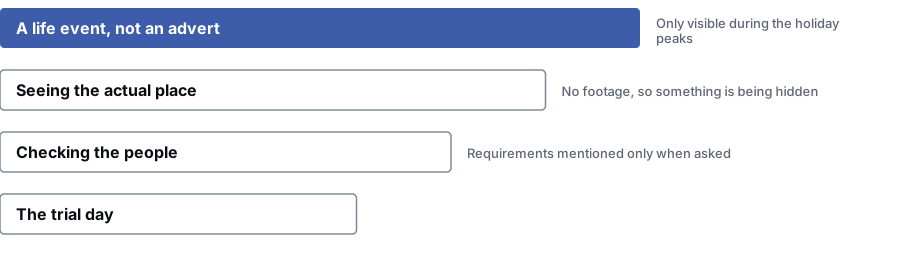
- 1A life event comes first — A puppy, a return to the office, a house move. These create customers — ads mostly find people already looking.Only visible during the holiday peaks
- 2Seeing the actual place — Video of the runs and sleeping areas does more than any description. No video, and owners assume the worst.No video, so owners think something is hidden
- 3Checking the people — Named staff, how long they’ve worked there, who’s there overnight. Matters more than the building.Requirements only mentioned when asked
- 4The trial day — A meet-and-greet settles most boarding and daycare decisions. Updates during a stay set you apart.
Where to spend
Start with local SEO, then the website
In the order we'd put them. Start at the top.
Found for the service and the animal
These searches are local and specific: a cattery, a groomer for a certain breed, boarding that takes two dogs in one run. Name those services on your profile, keep hours correct and collect recent reviews.
Availability, prices and answers on your site
Your site should save you work: availability for the dates people search, prices by size and length of stay, and vaccination requirements, with booking or a deposit that needs no back-and-forth.
Reviews, and how you answer an incident
Owners read reviews to see what happened when something went wrong. Ask for reviews after a stay, and reply to a difficult one calmly without sharing animal or owner details.
Your website
What to fix on your website
- Video and photos of your actual premises, runs and staff
- Availability for the dates people search, with peaks shown filling up
- Prices by size, service and length of stay, extras included
- Vaccination, licence and insurance requirements stated up front
- Staff-to-animal ratios, and who’s there overnight
- Separate sections for boarding, daycare, grooming and walking
- Deposit and cancellation terms, especially for busy periods
- What updates owners get during a stay, and how often
- What happens if an animal becomes unwell, including your vet arrangement
The rules
The rules on claims
Boarding, daycare and, in some places, home-based pet care need a local authority licence, often with a published rating. State the licence you hold, who issued it and its current status; customers can check the register.
Take care with insurance claims, because owners rely on them. Public liability, care and custody cover, and cover for animals in transit are separate things. Saying a business is “fully insured” tells a customer nothing while implying everything.
Anything close to diagnosing, treating or giving medication may fall under veterinary rules. Describing health outcomes or giving clinical-sounding advice can put a non-veterinary business on the wrong side of that line, even with good intentions.
Animal welfare law covers housing, staffing ratios, exercise and record keeping, and differs by jurisdiction. We write to the rules we understand apply — confirm licensing, insurance and welfare wording with your own local authority and insurer. This isn’t legal advice.
Sources
Official sources for each rule
Each rule above, linked to the body that publishes it. Which ones apply depends on where you work. Rules change, so check the latest version.
- Requires a local authority licence in England for activities including boarding for cats or dogs.
- SI 2018/486
- Source: Animal Welfare (Licensing of Activities Involving Animals) (England) Regulations 2018 (UK: England)
- Bars anyone not registered as a veterinary surgeon from practising, or holding out as practising, veterinary surgery.
- Vet Surgeons Act, s. 19
- Source: Veterinary Surgeons Act 1966, s. 19 (UK)
Questions
Quick answers on pet services marketing
We’re fully booked. Why would we spend anything on marketing?
Because being full in July tells you nothing about February, and the empty weeks are where you can grow. In a business limited by space, what counts is how full you are across the year.
The mix matters too. Filling quiet weeks with repeat customers who book three times a year beats filling a peak week with people you’ll never see again.
How far ahead should we open Christmas bookings?
Earlier than most businesses do, and to existing customers first. Owners planning around a holiday decide months ahead, and a returning customer offered dates first is less likely to shop around.
Opening early also shows you what’s left, which tells you whether the surrounding weeks need attention.
What convinces a nervous owner to book with us?
Seeing the place and the people. A video walk-through, staff named with their backgrounds, and a clear account of a typical day ease more worry than any claim about quality.
Then the practical answers: who’s there overnight, what happens if an animal gets ill, and what updates they’ll get while away.
Should we run grooming and boarding as one business?
Day to day, often yes. For marketing, split them — they behave nothing alike.
Grooming repeats every six to eight weeks and depends on rebooking. Boarding is event-driven, booked months ahead and needs a prompt to repeat. One page for both ends up treating one like the other.
How should we handle a bad review about an incident?
Reply calmly and publicly, without sharing anything about the animal or owner. Would-be customers read these reviews to see how you behave when something goes wrong.
A short, non-defensive reply that moves details to a private conversation reassures the next reader far better than arguing back.
Get a free website check
Start with the free checkup. It shows what to fix first on your website, with no sign-up. Want the full plan for your pet services business? Book a call, and we'll look at your market, your competitors and the searches that bring in customers.
Prefer to talk it over? Book a free call
Your BOOSTD score improves within 90 days, or your next month is free. After 6 months, more traffic or leads, or we keep working free (up to 6 free months in any 12 months). Read our guarantee
References
Sources for pet care business marketing
The official documents and research this page is based on. Platform rules change, so check the source before you act on a detail.
Related
More on pet services marketing
- pet business website designsBooking, vaccination records and licence details.
- improving your local visibility
Guides for pet services
Other consumer services businesses
Industries close to pet services
Last updated · Published by Zubair Afzal, responsible editor