
Pest Control marketing
Pest control marketing agency that turns callouts into plans
Pest control marketing that wins the urgent callouts, then turns finished jobs into prevention plans, the recurring work where the profit is.

Your website
Is your website losing you work?
- A page for each pest — that’s how people search, and what they’re scared of
- The safety question answered head-on: what you apply, re-entry times, children, pets, food areas
- Licences and technician certifications named, with the issuing body
- Same-day availability with a stated cut-off time
- Your prevention plan priced and explained, with what each visit covers
- Photos of your own technicians and vans, including unmarked options
- Warranty or re-treatment terms in plain words, with the period stated
- A commercial section with audit paperwork and sector experience
- Fast on a phone — many people search while looking at the problem
Common problems
Pest control marketing problems to fix first
Pest control has a demand pattern most trades would envy. It repeats every year, and your own job records show the busy weeks a year ahead.
The catch: the emergency callout, the thing everyone markets, earns the lower margin. The prevention plan you sell once the problem’s gone is what makes the business valuable.
- Every pest sits on one page called services.
- Someone with a wasp nest and someone who found droppings in the loft want very different answers. One page matches neither search and calms neither worry, leaving you relying on the map alone.
- The first question people ask is the last one you answer.
- Almost every enquiry asks some version of: is this safe around my kids, my pets, my food? Sites either ignore it or promise treatments are “safe”, which reassures nobody and most regulators dislike. Name the product type, the re-entry time and the precautions.
- You offer the plan at the worst moment.
- Pitch a plan during the emergency call and it sounds like an upsell. Offer it a week later, once the treatment’s worked, and it’s an easy chat about not going through this again. Moving the offer by seven days changes take-up more than any price change.
- The calendar is predictable, but the budget stays flat.
- Wasp enquiries arrive in a fortnight; rodent work starts with the first long cold spell. Publish content in spring for an August peak, and raise ad spend before the season while clicks are cheap. By the peak, every competitor is bidding and costs have doubled.
- Three different businesses share one service list.
- General pest work, termite treatment and wildlife removal each have different licences, job values and urgency. Termite work often comes through property sales; wildlife falls under protected species law. Lumped together, the high-value work never gets the pages or pricing it needs.
How they choose
Why they pick one business over another
Know how they choose and you know where to show up.
- Speed decides most home enquiries. Today or tomorrow beats almost everything else.
- Your safety answer decides whether they call you or the next company. Families with kids or pets want specifics, not vague reassurance.
- People check licences more here than in most trades — you’re applying chemicals in their home. A named certification beats a general claim.
- They read reviews to see whether the problem went away, and whether you came back free when it didn’t. A re-treatment guarantee often wins the tie.
- Discretion matters more than you’d think. With bed bugs and cockroaches, an unmarked van is a real reason to pick one company over another.
- Commercial buyers choose on paperwork: audit-ready reports, sector experience, records that satisfy an inspector. The treatment itself matters less.
From one nest to a contract
How an urgent wasp or rodent call becomes a yearly plan
The enquiry that comes in is urgent, seasonal and one-off. Everything that makes your year predictable gets sold in the days after that first treatment clearly worked.
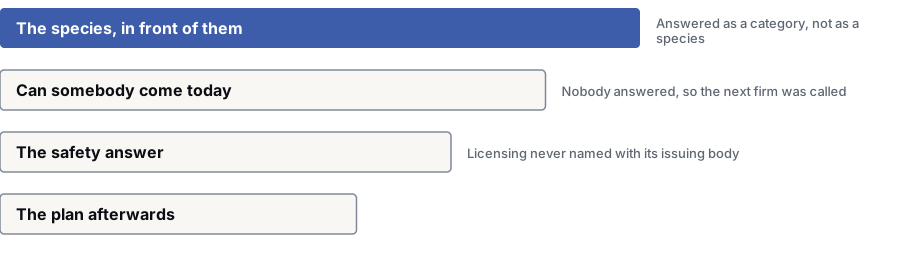
- 1The pest, right in front of them — Searched while looking at the problem. Demand follows the season for each pest.Answered as a general service, not by pest
- 2Can someone come today? — Availability and answered calls decide most home enquiries.Nobody answered, so they called the next firm
- 3The safety answer — Families with kids, pets or a breathing condition decide here. Most sites avoid it.Licence never named with its issuing body
- 4The plan afterwards — Prevention plans sell in the days after a treatment clearly worked. Commercial contracts carry the quiet months.
What people search
Searches such as “wasp nest removal”, grouped by intent
Pest and symptom searches
Searched while looking at the problem. Specific to each pest.
- wasp nest removal
- mice in the loft what to do
- bed bug treatment cost
- ant infestation in kitchen
- rat in the garden who to call
Urgent searches
Decided within hours. Saying when you can come matters most.
- emergency pest control near me
- pest control open today
- same day wasp nest removal
- how quickly can bed bugs be treated
Safety and precautions
The question under every enquiry, and the one most sites avoid.
- is pest control safe for pets
- how long to stay out of the house after spraying
- pest control while pregnant
- do i need to empty kitchen cupboards for pest control
Plans, commercial and property
The profitable half. Slower to win, and rarely marketed well.
- annual pest prevention plan cost
- commercial pest control contract
- pest control for restaurants audit
- termite inspection before buying a house
These are example searches from keyword research and public search data. Before we suggest anything, we check how often people search for them in your area.
Where to spend
Why local SEO comes before organic search
In the order we'd put them. Start at the top.
Map listings that name each pest
Urgent enquiries get decided from the map. A profile that just says “pest control” matches fewer searches than one naming wasps, rodents, bed bugs and wildlife. Correct hours and recent reviews do the rest.
A page for each pest, published before its season
Pages explaining how to identify a pest, what treatment involves and what it costs rank all year, catching searches ads can’t cover cheaply. Write them in the quiet months, live months before the peak.
Answering the safety question on the page
Your site’s main job: ease worries about what you apply around kids, pets and food. Add a form that asks for the pest and the address, so you can send the right technician fast.
Measuring results
Track the leads that pay
These numbers show if your marketing brings in customers. Website visits alone don't.
- Jobs booked, split between emergency callouts and planned work
- Prevention plans sold per finished treatment
- Plan retention and yearly renewal rate
- Revenue per technician day, and how tightly routes are packed
- Cost per booked job, by pest and by season
- Re-treatments under warranty, as a quality signal
- Commercial contracts won and kept, reported separately
- Share of enquiries by pest, against the season you planned for
The rules
What you can say in your ads
Applying pesticides commercially needs a licence almost everywhere, usually for both technician and business, often with extra endorsements for certain products. Name the certifications you hold and the issuing body, and never imply work outside your current licence, such as fumigation or handling protected species.
In many markets, safety claims about pesticides are regulated separately from ordinary advertising. Words like “safe”, “harmless” and “child-friendly” are often banned or restricted, even for low-risk products. Describe the product type, the precautions and the re-entry time, without promising an outcome.
Wildlife work falls under conservation and animal welfare law, not pesticide law. Protected species, nesting seasons, allowed trapping methods and disposal rules vary by jurisdiction. Describing a method that’s illegal locally is a real problem, even if the rest of your marketing is accurate.
Commercial contracts in food, hospitality and healthcare come with record-keeping and audit duties. Describe these accurately, not optimistically. We write to the rules we understand apply — confirm licensing and claim wording with your own regulator. This isn’t legal advice.
Sources
Links to each rule
Each rule above, linked to the body that publishes it. Which ones apply depends on where you work. Rules change, so check the latest version.
- Sets US standards for certifying applicators of restricted use pesticides.
- 40 CFR Part 171
- Source: US EPA, 40 CFR Part 171 (US)
- Treats pesticide label claims such as ‘safe’, ‘harmless’ or ‘non-toxic to humans and pets’ as false or misleading.
- 40 CFR 156.10
- Source: US EPA, 40 CFR 156.10(a)(5)(ix) (US)
- Treats ‘non-toxic’ claims for a product or service as needing substantiation and qualification.
- Green Guides § 260.10
- Source: FTC Green Guides, 16 CFR 260.10 (US)
Questions
Before you hire a pest control marketing agency
When should we be spending on wasp and rodent campaigns?
Before the season starts. Both patterns repeat every year and show up in your own job data, so have content published and campaigns live before the first enquiries arrive.
By the peak, demand finds everyone and clicks cost the most. Being there two weeks early is the whole advantage.
How do we sell more prevention plans?
Change when you offer them. Pitching one during the emergency call sounds like an upsell to someone stressed and wanting the problem gone.
A few days after a successful treatment, it’s a different conversation: trust is earned and nobody wants a repeat. Give the plan its own page and a clear price, not just a line on the services page.
Can we say our treatments are safe?
We’d avoid that exact wording. In a number of markets it’s restricted in pesticide advertising, whatever product you use.
The more effective answer is also the safer one: name what you apply, state the re-entry time, and explain precautions for kids, pets and food areas. Specifics reassure people. A blanket promise doesn’t.
How do we compete with national pest control brands?
Don’t fight them on the broadest searches, where budget decides. Compete on depth for each pest, same-day availability you can deliver, and local knowledge of pest problems in your area.
Plans and commercial work are easier to win than they look. National contracts get won centrally, but independent restaurants and property managers often prefer a company whose technician they know by name.
Should we market wildlife removal separately?
Yes — it often needs a different licence too. Wildlife work falls under conservation and welfare law, not pesticide rules, and people searching for it ask questions a general pest page doesn’t answer.
Keeping it separate also protects you. Describing a method that isn’t allowed locally is a real risk, and it’s easier to control on its own page.
Ready for more enquiries?
Start with the free checkup. It shows what to fix first on your website, with no sign-up. Want the full plan for your pest control business? Book a call, and we'll look at your market, your competitors and the searches that bring in customers.
Prefer to talk it over? Book a free call
Your BOOSTD score improves within 90 days, or your next month is free. After 6 months, more traffic or leads, or we keep working free (up to 6 free months in any 12 months). Read our guarantee
References
Sources for pest control marketing agency
The official documents and research this page is based on. Platform rules change, so check the source before you act on a detail.
Related
More on pest control marketing
- pest control website designsTreatment plans, licence lines and no "safe" pesticide claims.
- marketing for cleaning companies
Guides for pest control
Other consumer services businesses
Last updated · Published by Zubair Afzal, responsible editor