
Websites for caterers
Catering website design that turns a date and headcount into a quote
Websites for caterers that turn a guest count and a date into a quote request: sample menus with an allergen key, a dietary-needs form that reaches the kitchen, package pages for weddings and offices, and local SEO for every town you cook for.
- Website from $150/month, yours after 12 payments
- SEO plans from $149/month
The short answer
What should a catering website include?
A catering website should ask for the event date, guest count, service style and dietary needs in one short form, and show sample menus with an allergen key beside each dish. It needs separate pages for weddings, corporate and private events, the delivery area, how deposits work, and your licence details if you serve alcohol.
- Price
- $1,500 upfront, or $150/month × 12
- Ownership
- Yours after 12 payments
- Hosting and care
- $29 or $49/month
- Build time
- About 4 weeks for a local site
Our designs
Our website and app designs for caterers
Ready-to-launch concept designs for fictional businesses: pick one and make it yours. 7 websites, 2 apps and 1 software design, each opening on a desktop and a phone, with your brand, content and photos going in. All apps and software
10 of 10 examples shown
Concept website
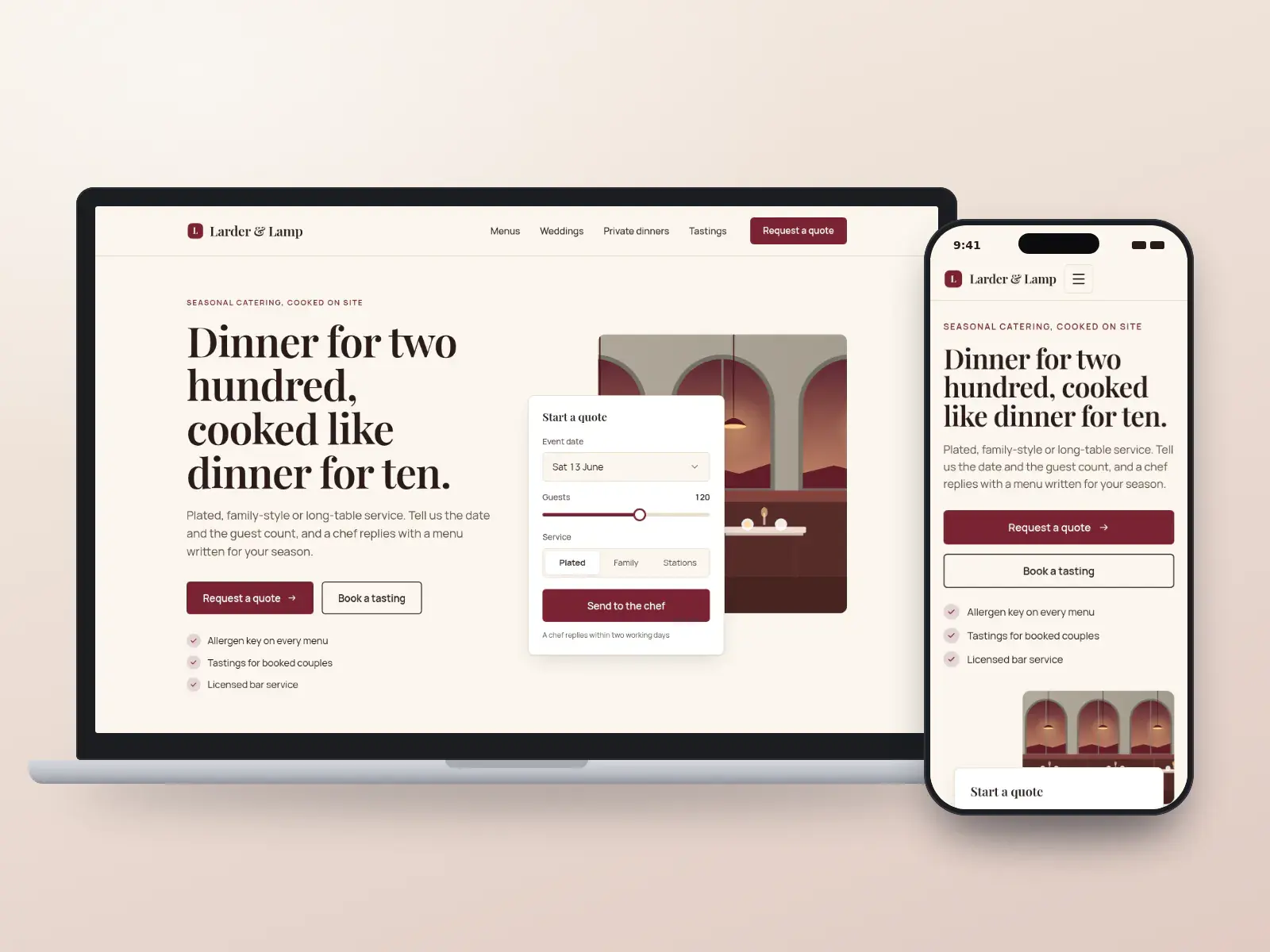
Larder & Lamp
Full-service wedding and event caterers
Concept design. The business is fictional.
- Warm
- Editorial
Local website: yours after 12 payments, or $1,500 upfront
Concept website
Trayline
Corporate and drop-off caterers
Concept design. The business is fictional.
- Tool-first
- Bold
Local website: yours after 12 payments, or $1,500 upfront
Concept website
Fennelwick
Private chefs and small-wedding caterers
Concept design. The business is fictional.
- Editorial
- Minimal
Local website: yours after 12 payments, or $1,500 upfront
Concept website
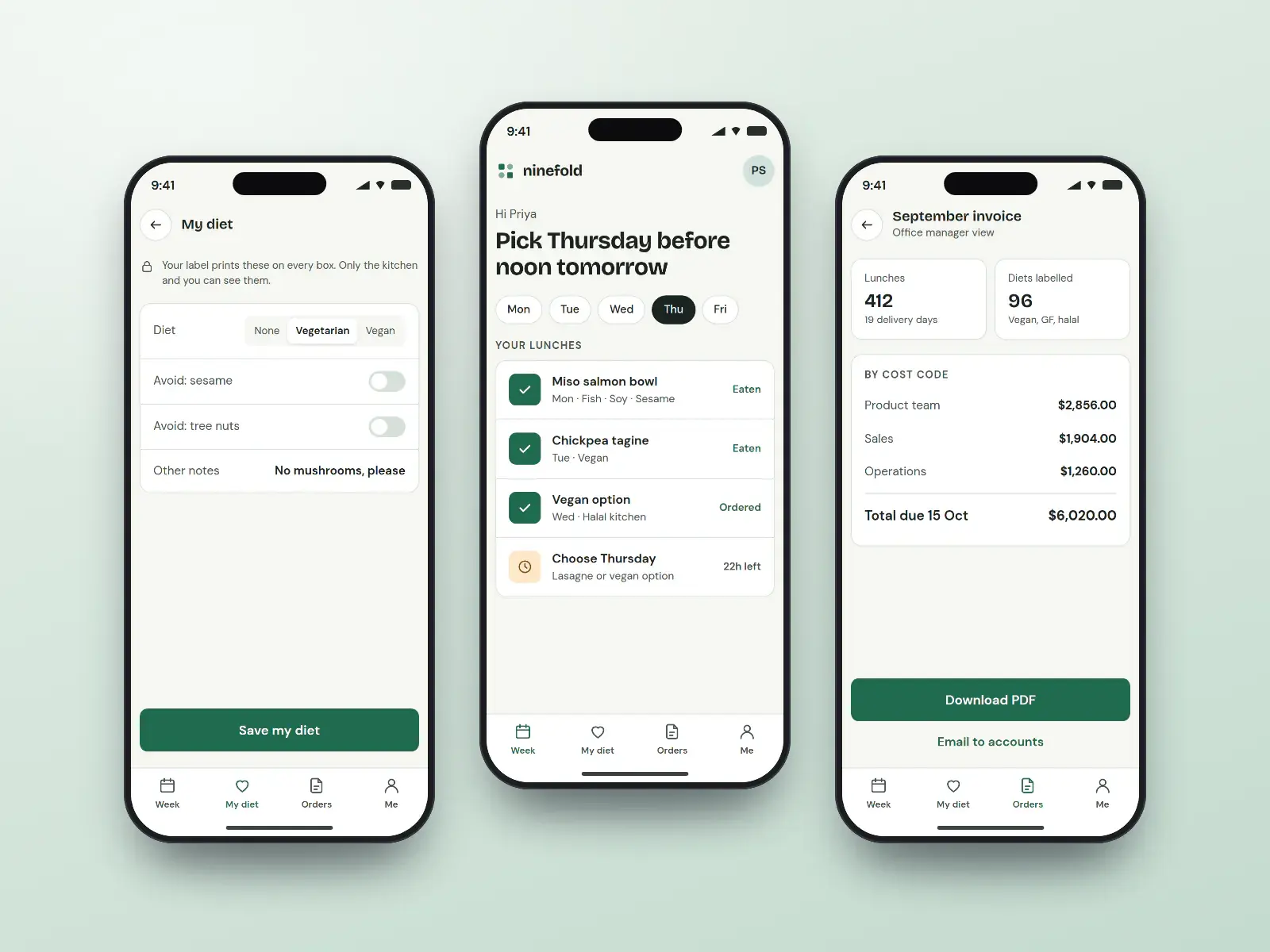
Ninefold Kitchen
Caterers running weekly office meal programs
Concept design. The business is fictional.
- Data-led
- Tool-first
Local website: yours after 12 payments, or $1,500 upfront
Concept website
Cinderfield
Live-fire, barbecue and food-station caterers
Concept design. The business is fictional.
- Dark
- Bold
Local website: yours after 12 payments, or $1,500 upfront
Concept website
Sproutline
Plant-based and allergy-aware caterers
Concept design. The business is fictional.
- Friendly
- Playful
Local website: yours after 12 payments, or $1,500 upfront
Concept website
Saffron & Slate
Halal and South Asian wedding caterers
Concept design. The business is fictional.
- Luxury
- Warm
Local website: yours after 12 payments, or $1,500 upfront
Concept app
Ninefold office app
Office staff and managers on a weekly lunch program
Concept design. The business is fictional.
- Friendly
- Minimal
Quoted per project after a call
Concept app
Larder & Lamp crew run sheet
Event crews and captains on the day
Concept design. The business is fictional.
- Dark
- Tool-first
Quoted per project after a call
Concept software
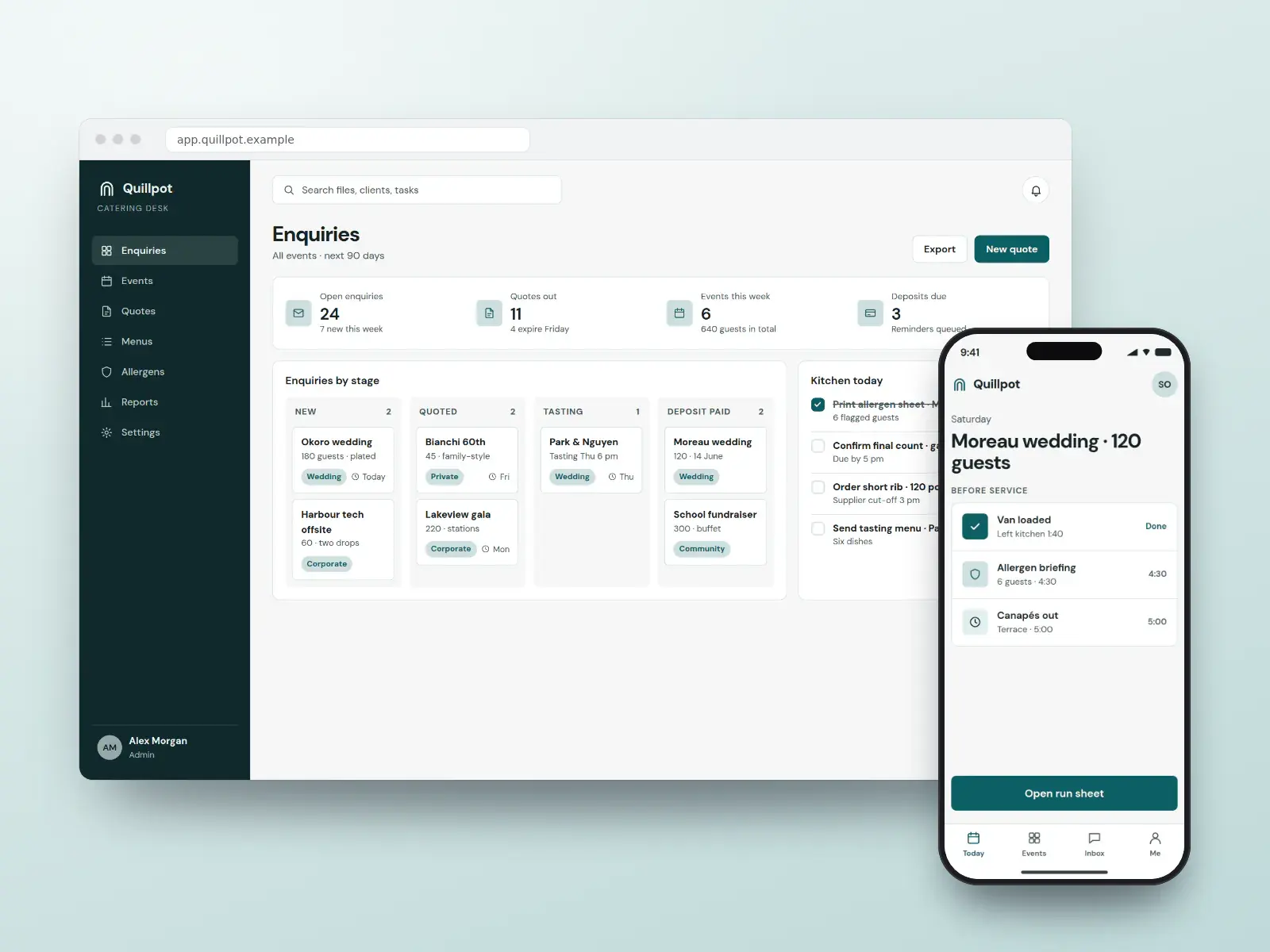
Quillpot catering desk
Caterers who quote and run many events a week
Concept design. The business is fictional.
- Data-led
- Minimal
Quoted per project after a call
Pay monthly, own it
High-converting websites from $150/month
Pick a design, add your brand, content and photos, and launch. Yours after 12 payments, with SEO built in from day one.
- Local website
- $150/monthUp to 25 pages · yours after 12 payments, or $1,500 upfront
- Growth website
- $400/monthUp to 100 pages · yours after 12 payments, or $4,000 upfront
Built in
What every caterer website includes
A quote form built on guest count and date
The form asks what the kitchen needs to price a job: date, start time, venue, guest count, service style and dietary counts. Incomplete enquiries stop arriving, and each one lands in your inbox and phone at once.
Menus with an allergen key
Sample menus you edit yourself, with each dish coded for the priority allergens and diets such as vegan, halal or gluten-free on request, plus a downloadable ingredient sheet for planners who ask.
Package pages that rank
Separate pages for wedding catering, office lunches, boxed meals, food stations and private dinners, each written around what that buyer searches for and each with its own quote button.
Date availability without a phone call
Mark fully booked dates and peak-season weekends yourself, so a couple sees whether their Saturday is open before they fill in the form, and you stop answering enquiries you cannot take.
Tasting bookings and deposits
Booked clients pick a tasting slot and pay a deposit online through your payment provider, with the deposit and cancellation terms shown in writing before they pay.
Repeat ordering for offices
Company accounts reorder last week’s lunch in two taps, change headcount until your cut-off and download invoices, which turns a one-off order into a standing weekly program.
A delivery and service area map
The towns and venues you cover, a page for each area you want to be found in, and a clear line on travel charges, so an out-of-area enquiry is answered by the page itself.
Venue and planner referrals
A page for the venues where you are an approved caterer and a short form for planners, so the referrals that already drive your season can find your menus and book a call.
Compliance
The rules for caterers, handled in the design
Caterers answer to food safety, allergen and liquor rules that change with the province or state and with the kind of event. These are the ones the designs are built around, and each rule links to its source.
Sources gathered October 1, 2026. This is how our designs handle these rules, not legal advice: rules change and differ by province and state, so your lawyer, local health unit or liquor regulator has the final word, and you approve every page before it goes live.
- Canada
The priority allergens guests ask about
Health Canada lists the priority food allergens, among them peanuts, tree nuts, sesame, milk, eggs, fish, shellfish, soy, wheat and mustard, plus gluten sources and sulphites. Its labelling rules govern prepackaged food; the menu designs use the same list for their allergen key so guests recognise it.
- US
The nine major food allergens
The FDA names nine major food allergens, with sesame added by the FASTER Act. Label declaration applies to packaged food, so a boxed lunch you package and label may be affected; the boxed-meal designs print each box’s allergens and the menus code every dish with the same nine.
- US
Calorie labelling for chains
Federal menu labelling reaches restaurants and similar retail food establishments belonging to a chain with at least 20 outlets that sell substantially the same menu items. Most independent caterers fall outside it, so calorie fields stay off by default and are switched on for a caterer that is part of a covered chain.
US — 21 CFR 101.11, nutrition labelling of standard menu items (eCFR)
- Ontario
Calories on menus for larger Ontario chains
The Healthy Menu Choices Act makes food service premises that belong to a chain with at least 20 Ontario outlets post calories for standard menu items. An independent caterer is unlikely to be covered; if you are, the menu template carries the calorie line and the contextual statement the regulation asks for.
- Ontario
Serving alcohol at someone else’s event
The AGCO describes a caterer’s endorsement as an add-on to a liquor sales licence that lets you sell and serve at events sponsored by someone else, with limits, and says you cannot promote an event at which you are selling liquor. Bar pages describe service at client-hosted events and never advertise a ticketed party.
- US
Seasonal menu emails
Commercial email such as a holiday-menu announcement must identify you, carry a valid postal address and offer a working opt-out that is honoured within ten business days. The newsletter sign-up and footer templates include all three.
Everything for caterers
Websites, apps, branding and SEO for caterers
Websites
Caterers websites built on the designs above, fast and set up for search.
From $150/month
Apps
Most caterers need a strong website, not an app. An app starts to pay when offices order from you every week or when your event crews need one place for the day’s run sheet.
Quoted per project
Apps for caterersBranding
A catering brand has to look as good on a printed menu card and a van door as it does online, and it has to signal the kind of food before anyone reads a word.
Quoted per project
Branding for caterersSEO and leads
Ongoing SEO that checks your site every week and fixes what is safe to fix, for more quote requests and tasting bookings.
From $149/month
SEO plans and prices
Pricing
What a caterer website costs
The price of a caterer website is the same as any website we build: pay upfront and save, or spread it over 12 months.
Local website
$150/month × 12
or $1,500 upfront. Yours after the 12th payment.
- Up to 25 pages
- Any design on this page
- Technical SEO at launch
- Hosting and care $29/month
Growth website
$400/month × 12
or $4,000 upfront. Yours after the 12th payment.
- Up to about 100 pages
- Teams, offices and more integrations
- Planned with an advisor
- Hosting and care $49/month
SEO plans
$149/month
Local $149 · Growth $399
- Checks your site every week and fixes what is safe to fix
- New pages every month
- 7-day trial
Prices in US dollars. How payments, hosting and ownership work.
How it works
How your caterer website goes live
- 01
Pick a design
Choose one of these, or ask for something new. Tell us your service styles and the area you cater in.
- 02
Send your menus
Sample menus, your allergen sheet, package names, deposit terms, event photos and licence details if you run a bar.
- 03
Review before launch
Check every dish, allergen code and quote question with your content in place, and ask for changes.
- 04
Launch and grow
We redirect your old pages, go live and keep wedding and corporate searches bringing in quote requests.
Pick my design
See your website before you pay for it
Choose a design and tell us about your business. An advisor emails you to plan a preview with your name, your colours and your details, and the price options. Nothing is charged until you decide.
- 1An advisor replies by email
- 2We plan your preview and scope
- 3You decide, with every price in writing
Questions
Caterers: common questions
- How much does a catering website cost?
- A catering website of up to 25 pages is $1,500 paid upfront, or $150 a month for 12 months, and it is yours after the 12th payment. A larger site of up to about 100 pages is $4,000, or $400 a month. Hosting and care is $29 or $49 a month. Prices are in US dollars.
- What should a catering quote form ask?
- It should ask for what you need to price the job: the event date and start time, the venue or delivery address, the guest count, the service style (drop-off, buffet, stations or plated) and how many guests have each dietary need. Each enquiry then reaches you complete, and you can reply with a menu and a number the same day.
- Can I show allergens on my online menu?
- Yes. Every dish carries a short allergen code, built on the priority allergens Health Canada and the FDA list, and you can attach a full ingredient sheet for planners who ask. You edit menus yourself each season. The designs never promise an allergen-free kitchen; they explain how you handle a guest’s allergy instead.
- Can office clients order catering online?
- Yes. Company accounts can choose a delivery window, set the headcount and dietary counts, reorder a past lunch and download invoices. Orders can flow to the ordering or payment system you already use, such as Square or Toast, where that provider’s access allows it, so nothing has to be keyed in twice.Running more than one kitchen, or a franchise? Book a demo, choose the multi-location option, and we will quote the whole operation.
- Should a catering website show prices?
- Showing a starting price per guest for each package usually brings in better-qualified enquiries, because couples and office managers can see whether you fit their budget before they write. You set the wording yourself, from a per-guest starting point to “quoted for your event”, and you can change it at any time.
- Can you build a catering app or do SEO for caterers too?
- Yes. One request form handles all of it, from a catering website or app to SEO and marketing; just tick what you need. Most caterers start with the website; an ordering app makes sense once offices reorder every week, and SEO for caterers keeps wedding and corporate searches coming after launch.
- Will my caterer website rank on Google?
- It launches with the technical SEO done: fast pages, clean structure, structured data, local pages and redirects from your old site. To keep climbing, a BOOSTD SEO plan from $149 a month runs 262 checks on your site every week, fixes what is safe to fix and gets the rest ready for your OK.No one can promise a position on Google, and we never do. Google warns businesses about anyone who does.
- Can I get one of these catering website designs?
- Yes. Each is a complete, ready-to-launch website design BOOSTD made for caterers. Pick one and we make it yours, with your name, colours, photos, content and the licence or compliance details your industry expects, from $150 a month and yours after 12 payments.Approved client sites are shown with a “Client work” tag, and only with the client’s written permission.
Guides for caterers
Reading for caterers before you build
- Planned guideWhat to ask for on a catering quote formPlanned: written with a named author and published once reviewed
- Planned guideShowing allergens on a catering menu onlinePlanned: written with a named author and published once reviewed
- Google Business ProfileGoogle Business Profile optimization guide, field by field
- ReviewsHow to ask for Google reviews without breaking the rules
More on catering website design
Free, about a minute, nothing changes on your site
Start with a free checkup of your current site
See what holds your current website back across every point, free, before you choose a design.
- Free, no cardNo sign-up to see your preview.
- Read-onlyNothing changes on your website.
- 90-day guaranteeIf you join: a better score, or your next month free.